
Managing Cognitive Decline in Older Dogs: Practical Steps That Help
Posted by Atlantic Pet Products on Apr 24, 2026
Dog dementia can sneak up as small behaviour changes: a once-confident companion seems unsettled, forgetful, or out of sync with familiar routines. Cognitive decline in dogs is common with ageing, and early support can make day-to-day life calmer for both of you.
If you’ve noticed senior dog confusion, the goal isn’t to “fix” your dog overnight—it’s to reduce stress, prevent accidents, and protect their comfort and safety.
Signs your older dog may be struggling
Age-related mental changes often look like “odd moments” at first. You might notice your dog wandering aimlessly, staring at walls, getting stuck behind furniture, or seeming lost in a familiar room. Some dogs become clingier, more anxious, or less interested in play and interaction.
Common patterns linked with dog dementia include disrupted sleep (restless at night, sleepy in the day), changes in house training, and altered social behaviour. Cognitive decline in dogs can also show up as slower responses to cues they once knew well, or hesitating at doorways and steps.
Keep a simple log for 1–2 weeks: what happened, when, and anything that might have triggered it (noise, visitors, schedule changes). This helps you spot patterns and track whether senior dog confusion is getting better, worse, or staying steady.
Rule out medical causes first
Many issues that look like cognitive changes are actually physical discomfort or sensory loss. Arthritis pain, dental disease, urinary tract problems, digestive upset, and reduced vision or hearing can all lead to restlessness, accidents indoors, irritability, or withdrawal.
Medication side effects, new supplements, or changes in diet can also affect sleep and behaviour. Before assuming it’s cognitive decline in dogs, consider what else may have changed recently—food, routine, household stress, or mobility.
Even if dog dementia is part of the picture, addressing underlying health issues can make a noticeable difference in comfort and confidence.
Create a supportive home routine
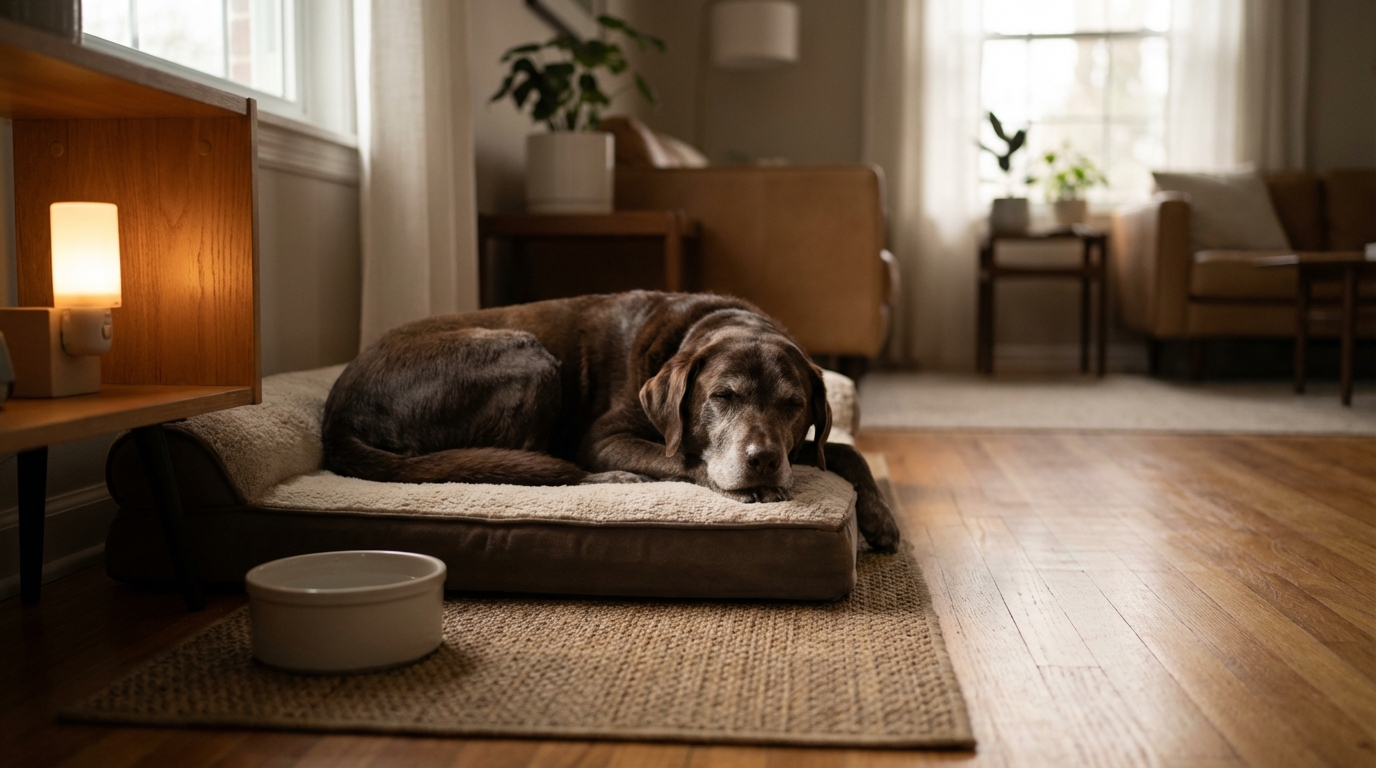
Predictability is soothing for older dogs. Keep feeding, walks, and bedtime on a consistent schedule, and avoid frequent furniture rearranging so your dog can navigate by memory.
Make the environment easier to read. Add non-slip runners on slick floors, keep pathways clear, and use a night light in hallways if your dog paces after dark. If your dog seems unsure near stairs, block access or guide them with a lead rather than allowing repeated slips or near-falls.
Accidents are common with senior dog confusion—plan for them without punishment. Try more frequent toilet breaks, especially after naps and meals, and consider washable bedding or protective covers for your dog’s favourite spots.
Quick tip: Put a small bell on your dog’s collar (or on yourself) so they can locate you more easily during pacing, and you can hear if they’ve become stuck in a corner or behind a door.
Finally, reduce “startle moments”. Approach from the front when possible, speak before touching, and keep unfamiliar visitors calm and low-key.
Daily habits that support brain and body
Gentle activity helps maintain confidence and routine. Short, frequent walks are often better than one long outing, especially if your dog tires easily or becomes overwhelmed. Let them sniff—slow “sniff walks” can be mentally enriching without overexertion.
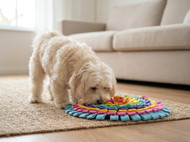
Offer simple enrichment that your dog can succeed at. Food puzzles with easy settings, snuffle mats, or scatter-feeding in one safe area can provide “brain work” while avoiding frustration. If your dog becomes agitated, scale back and keep sessions brief.
Support comfort to reduce anxious pacing. Orthopaedic-style bedding, warm resting areas, and easy access to water can help older dogs settle more readily. If mobility is limited, ramps or low steps to favourite resting spots can prevent slips and preserve independence.
Don’t overlook parasite protection as part of overall senior health. Older dogs may have less resilience when itchy, unwell, or run-down, so maintaining consistent prevention can help keep their routine steady. Browse flea and tick preventatives and heartworm prevention options to stay on schedule.
What to stock up on for easier senior care
When cognitive decline in dogs is involved, the best tools are the ones that reduce stress and prevent problems before they happen. A small “senior support kit” can make daily care simpler and protect your home.
- Non-slip mats and runners: Improve confidence on hard floors and reduce falls.
- Night lights: Helpful for dogs who wander or struggle to orient at dusk or during night waking.
- Washable bedding and covers: Makes clean-up easier if accidents occur.
- Baby gates or barriers: Prevent access to stairs, tight spaces, or rooms where your dog may get stuck.
- Enrichment toys: Choose simple puzzles your dog can solve without frustration.
- Grooming essentials: Older dogs may tolerate less handling; keeping coats clean and nails short supports stability and comfort.
For households managing dog dementia, consistency matters as much as the product itself. Set reminders for replenishing essentials and keeping parasite protection up to date via flea and tick preventatives and heartworm prevention, so a missed dose doesn’t add itchiness or illness to an already confusing time.
Frequently Asked Questions
How do I tell the difference between ageing and dog dementia?
Normal ageing might look like slower movement or longer naps, while dog dementia tends to involve disorientation, changed sleep patterns, and altered social behaviour. A behaviour log can help you see whether changes are occasional or becoming consistent.
Why is my older dog restless at night?
Night-time pacing can be linked with senior dog confusion, discomfort, needing the toilet, or changes in hearing/vision that make the dark unsettling. Try a consistent bedtime routine, a night light, and a late toilet break to reduce triggers.
Can cognitive decline in dogs be managed at home?
Yes—many dogs do better with predictable routines, safer flooring, gentle enrichment, and support for mobility and comfort. Management is about reducing stress and preventing accidents, not forcing your dog to cope with constant change.
To keep daily life simpler as your dog ages, stock up on routine essentials like flea and tick preventatives and heartworm prevention so you can focus on comfort and stability; if you’re worried about sudden changes, chat to your vet.