

Cat Dental Care: Why Most Owners Overlook It
Posted by Atlantic Pet Products on May 13, 2025
When it comes to dental care for cats, most owners simply don't think about it. Studies suggest that the majority of cats over three years old already show signs of dental disease — yet routine cat teeth cleaning rarely makes it onto the household to-do list. Understanding why this happens, and what you can do about it, could add healthy years to your feline's life.
Why Cat Dental Care Gets Overlooked
Cats are masters at hiding discomfort. Unlike dogs, who may paw at their mouths or drool noticeably, a cat with a sore tooth will often continue eating and acting normally until the problem becomes severe. This stoic behaviour means owners rarely spot an issue early.
There's also a common misconception that dry food alone keeps teeth clean. While kibble texture can offer minor abrasive benefits, it is nowhere near sufficient to prevent plaque and tartar build-up on its own.
Finally, many owners simply aren't aware that dental care for cats is something they need to manage at home. The focus tends to fall on parasite prevention, vaccinations, and nutrition — all essential, but incomplete without attention to oral health.
Warning Signs of Dental Problems in Cats
Catching dental disease early makes treatment simpler and less stressful for your cat. Keep an eye out for these red flags:
- Bad breath — a persistent foul odour is often the first noticeable sign.
- Red or swollen gums — healthy gums should be a pale pink colour.
- Drooling or dropping food — difficulty chewing may indicate pain or loose teeth.
- Pawing at the mouth — a less common but telling behaviour.
- Reduced appetite or weight loss — some cats stop eating hard food entirely.
If you spot any of these signs, don't wait to see if they resolve on their own. Left untreated, dental infections can spread to the kidneys, liver, and heart — turning a localised problem into a systemic one.
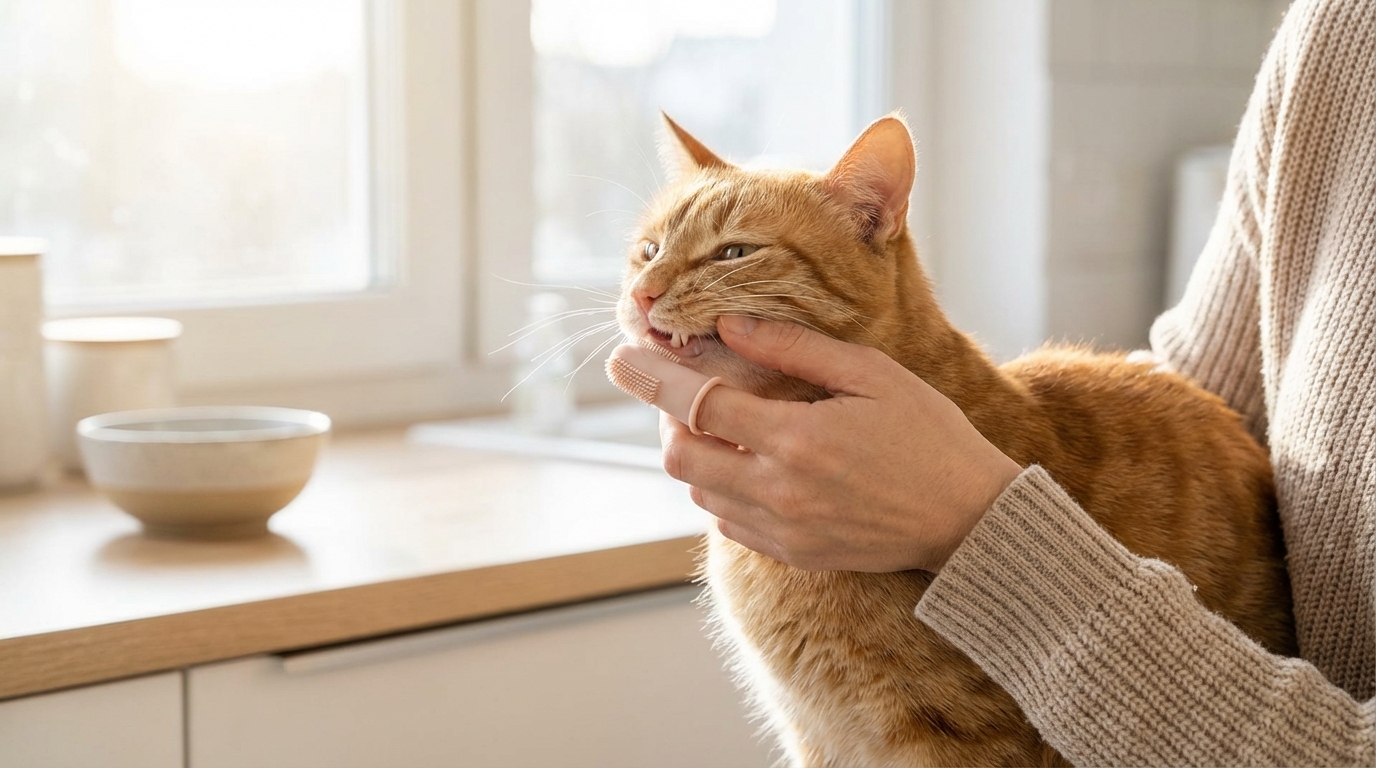
How to Approach Cleaning Your Cat's Teeth
The idea of brushing a cat's teeth sounds daunting, but with patience it's entirely achievable. Start by letting your cat taste a pet-safe enzymatic toothpaste from your finger for a few days. Once they accept that, graduate to a finger brush or a small soft-bristled toothbrush designed for cats.
Focus on the outer surfaces of the teeth — that's where plaque accumulates most. You don't need to open the jaw wide; gentle lip-lifting is enough. Aim for short sessions of about thirty seconds to a minute, gradually increasing as your cat becomes comfortable.
Quick tip: Pair each teeth-cleaning session with a favourite treat or play session immediately afterwards. Cats form associations quickly, and a positive reward makes future sessions far easier.
Even two to three brushing sessions per week can make a meaningful difference to your cat's oral health. Consistency matters more than perfection.
Products That Support Feline Dental Health
Brushing is the gold standard, but it's not the only tool available. Dental treats, water additives, and specially formulated dental diets all contribute to reducing plaque and freshening breath between brushings.
When choosing dental products, look for those carrying a veterinary oral health council seal or similar endorsement. This ensures the product has been tested for effectiveness rather than relying on marketing claims alone.
You can browse a full range of health and wellness essentials — including dental-support options — in our cat product collection. Combining a quality dental product with routine brushing creates a layered defence against tartar build-up.
Don't forget that overall health plays a role in oral health, too. Keeping your cat up to date on parasite prevention and nutrition supports their immune system, which in turn helps fight oral bacteria. Explore our full range of cat supplies to ensure every aspect of their wellbeing is covered.
Building a Long-Term Dental Routine
The best dental care plan is one you can actually stick to. Rather than aiming for daily perfection and burning out after a week, set a realistic schedule. Two to three brushing sessions per week, supplemented by dental treats or a water additive on off-days, is a sustainable approach for most households.
Keep your cat's toothbrush and paste somewhere visible — next to their food bowl, for example — so it serves as a daily reminder. Many owners find that tying teeth cleaning to an existing routine, like the evening feed, helps it become second nature.
Track your cat's dental health over time. Lift their lips once a month and check for changes in gum colour, new tartar deposits, or any unusual lumps. This quick visual inspection takes seconds and can catch problems before they escalate.
As your cat ages, professional dental assessments become increasingly important. An annual oral check-up with your vet can identify issues that home care alone may miss, ensuring your cat's teeth stay healthy for as long as possible.
Frequently Asked Questions
At what age should I start cleaning my cat's teeth?
Ideally, introduce dental care when your cat is still a kitten. Young cats adapt to handling around the mouth much more readily. That said, it's never too late to start — even adult and senior cats can learn to tolerate brushing with a gradual, reward-based approach.
Can dental treats replace brushing entirely?
Dental treats are a helpful supplement but not a full replacement for brushing. They can reduce surface plaque and freshen breath, yet they don't reach every tooth surface the way a brush does. Think of them as one part of a broader oral-care toolkit.
Is bad breath in cats normal?
Mild odour after eating is common, but persistent, strong-smelling breath is not normal and usually signals dental disease or another underlying health issue. If bad breath doesn't improve within a day or two, it warrants further attention.
Your cat's dental health is too important to overlook. Browse our complete cat collection to find everything you need to support their teeth, gums, and overall wellbeing — and chat to your vet if you have any concerns about your cat's oral health.