
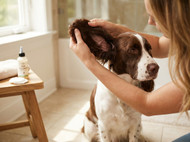
How to Clean Your Dogs Ears Safely at Home
Posted by Atlantic Pet Products on May 13, 2023
Learning how to clean your dog's ears is one of the simplest ways to prevent painful infections and keep your pet comfortable between grooming appointments. Dirty ears can harbour bacteria and yeast, leading to odour, irritation, and costly vet visits. With the right technique and a quality ear cleaner, the whole process takes less than five minutes.
Why Regular Ear Cleaning Matters
A dog's ear canal is L-shaped, which means moisture, wax, and debris can easily become trapped deep inside. Over time this warm, damp environment becomes a breeding ground for bacteria and yeast.
Breeds with floppy ears — Cocker Spaniels, Basset Hounds, and Labrador Retrievers, for example — are especially prone to build-up because the ear flap restricts airflow. Dogs that swim frequently or live in humid conditions face the same risk.
Routine cleaning removes that build-up before it triggers inflammation, itching, or a full-blown infection. It also gives you a regular opportunity to spot problems early, when they are easiest to manage.
What You Need Before You Start
Gather your supplies so the process is quick and stress-free for both you and your dog:
- Veterinary-grade ear cleaner — choose a gentle, pH-balanced solution designed for dogs. Browse our range of dog care products for trusted options.
- Cotton balls or gauze pads — never use cotton buds (cotton swabs), which can push debris deeper or damage the ear canal.
- A towel — your dog will shake their head, and ear cleaner goes everywhere.
- Treats — rewarding calm behaviour turns ear cleaning into a positive experience over time.
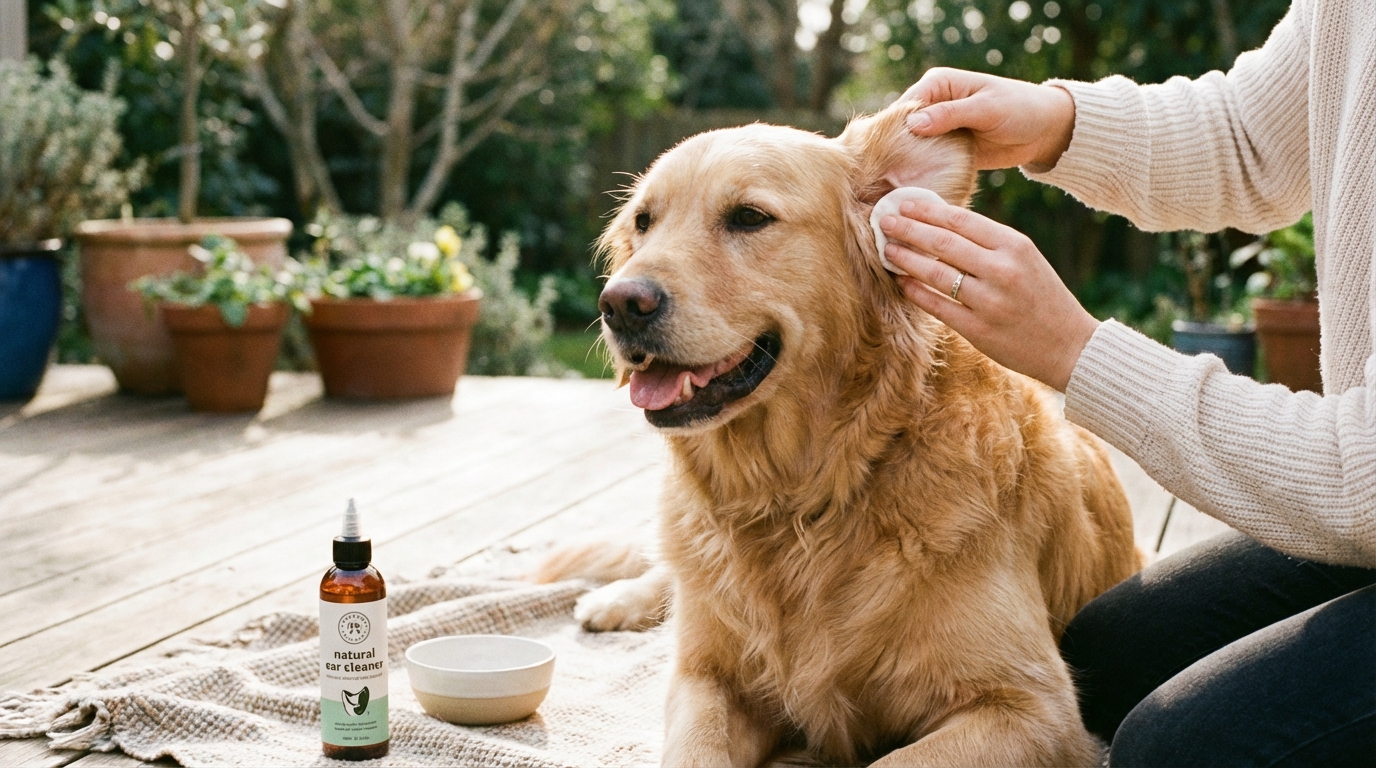
Step-by-Step Ear Cleaning Guide
1. Position your dog comfortably. Sit on the floor or have your dog on a non-slip surface. If your dog is wriggly, ask a helper to hold them gently.
2. Inspect the ear. Lift the ear flap and look inside. Healthy ears are pale pink with minimal wax and no strong odour. If you see heavy redness, swelling, or discharge, skip cleaning and seek professional advice.
3. Apply the ear cleaner. Hold the ear flap up and squeeze enough solution into the canal to fill it. Do not let the bottle tip touch the ear — this prevents cross-contamination.
4. Massage the base of the ear. Fold the ear flap down and gently massage the cartilage at the base for 20–30 seconds. You should hear a soft squelching sound as the solution loosens wax and debris.
5. Let your dog shake. Stand back (or hold up the towel) and let your dog shake their head. This brings dissolved debris up and out of the canal naturally.
6. Wipe away residue. Use a cotton ball or gauze pad to gently wipe the visible part of the ear canal and the inner ear flap. Never insert anything deep into the canal.
7. Repeat on the other ear. Use a fresh cotton ball for each ear to avoid transferring bacteria.
8. Reward your dog. Finish with a treat and praise so they associate ear cleaning with something positive.
Quick tip: If your dog pulls away or yelps during cleaning, stop immediately. Pain during routine cleaning can indicate an existing infection that needs professional attention.
How Often Should You Clean Your Dogs Ears
For most dogs, a fortnightly clean is sufficient. Dogs with floppy ears, allergies, or those that swim regularly may benefit from weekly cleaning.
Over-cleaning can strip the ear of its natural protective oils, so more is not always better. A good rule of thumb: if the ears look and smell clean, leave them alone until the next scheduled session.
Keeping on top of ear care fits neatly into a broader preventative health routine. While you are maintaining your dog's grooming schedule, it is also worth staying current on flea and tick prevention — external parasites can cause intense scratching around the ears that worsens wax build-up and irritation.
Signs of an Ear Infection to Watch For
Even with regular cleaning, infections can still occur. Watch for these warning signs:
- Persistent head shaking or tilting
- Redness or swelling inside the ear flap
- Dark brown or yellowish discharge
- A strong, unpleasant odour
- Whimpering or sensitivity when the ear is touched
- Loss of balance or coordination (in severe cases)
If you notice any of these symptoms, pause your at-home cleaning routine and have a veterinarian examine the ear. Cleaning an actively infected ear with the wrong product can make things worse.
Frequently Asked Questions
Can I use water or homemade solutions to clean my dog's ears?
Plain water does not break down waxy build-up effectively and can leave excess moisture in the canal, increasing infection risk. A purpose-made, pH-balanced canine ear cleaner is the safest and most effective option.
My dog hates having their ears cleaned — what can I do?
Start by handling your dog's ears gently during calm moments without cleaning them, then reward with treats. Gradually introduce the cleaner over several sessions. Most dogs learn to tolerate the process once they associate it with positive rewards.
Is ear cleaning enough to prevent ear infections entirely?
Regular cleaning significantly reduces the risk, but it cannot eliminate every cause. Allergies, hormonal conditions, and foreign bodies like grass seeds can all trigger infections regardless of hygiene. If your dog suffers from recurring ear problems, chat to your vet to identify any underlying causes.
Ready to stock up on everything you need for a healthier, happier dog? Browse our full range of dog care essentials at Atlantic Pet Products and find veterinary-grade solutions delivered straight to your door.